
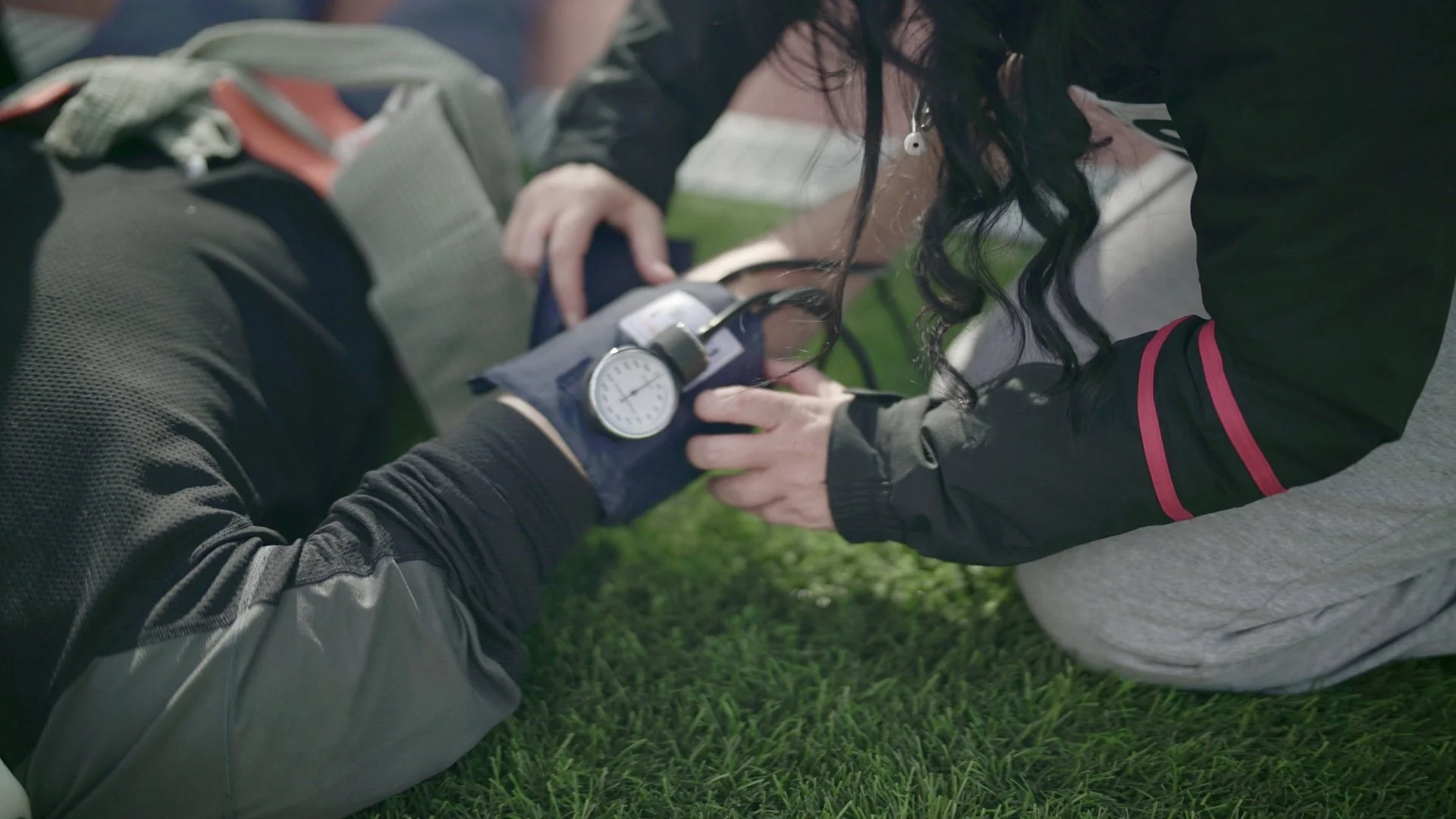
IFAR – International First Aid Response
Level 3 Award in International First Aid Response (RQF) is designed to provide designated first aiders with a comprehensive understanding of emergency first aid response, casualty management, and the importance of medical and environmental awareness.
This programme is specifically designed for personnel operating internationally, including those working within humanitarian, corporate, operational, or higher-risk environments where access to immediate medical support may be limited.
The qualification supports learners in developing both practical first aid capability and situational understanding, enabling them to assess risk, respond effectively to incidents, and manage casualties safely until further medical support becomes available.
Successful learners will receive a recognised Level 3 Award in International First Aid Response (RQF) certificate, valid for 3 years. Annual refresher training is recommended to maintain competency and operational readiness.
Operational Relevance
The programme is designed to support personnel operating in humanitarian and international travel environments and is suited to field operations and mobile teams working in higher risk operational settings
Training is delivered with a focus on:
Practical application
Decision-making under pressure
Situational awareness
Safe casualty management in complex environments
Certification
Delegates successfully completing the programme will be awarded the: Highfield Level 3 Award in International First Aid Response (RQF),. Certification is valid for 3 years.
Course Overview
Duration: 3 Days
Location: Amman, Jordan
Format: Classroom instruction combined with practical learning
Group Size: 12-16 participants
This intensive 3-day programme combines classroom instruction with practical scenario-based exercises to develop confidence, decision-making, and effective casualty management skills in a range of environments.
Topics Covered
Topics covered include:
The role and responsibilities of a first aider
Scene assessment and casualty management
Managing an unresponsive casualty who is not breathing normally
Cardiopulmonary resuscitation (CPR) and the safe use of an automated external defibrillator (AED)
Managing external bleeding and traumatic injuries
Managing burns, fractures, shock, and medical emergencies
Managing casualties with minor injuries
Understanding how environmental factors can impact the provision of first aid
Understanding medical and environmental intelligence in operational settings
Incident management and communication during emergencies
Practical casualty handling and scenario-based exercises

Expand Awareness in Complex Environments
IFAR develops medical response capability. Explore HEAT to strengthen awareness and decision making in complex environments.